

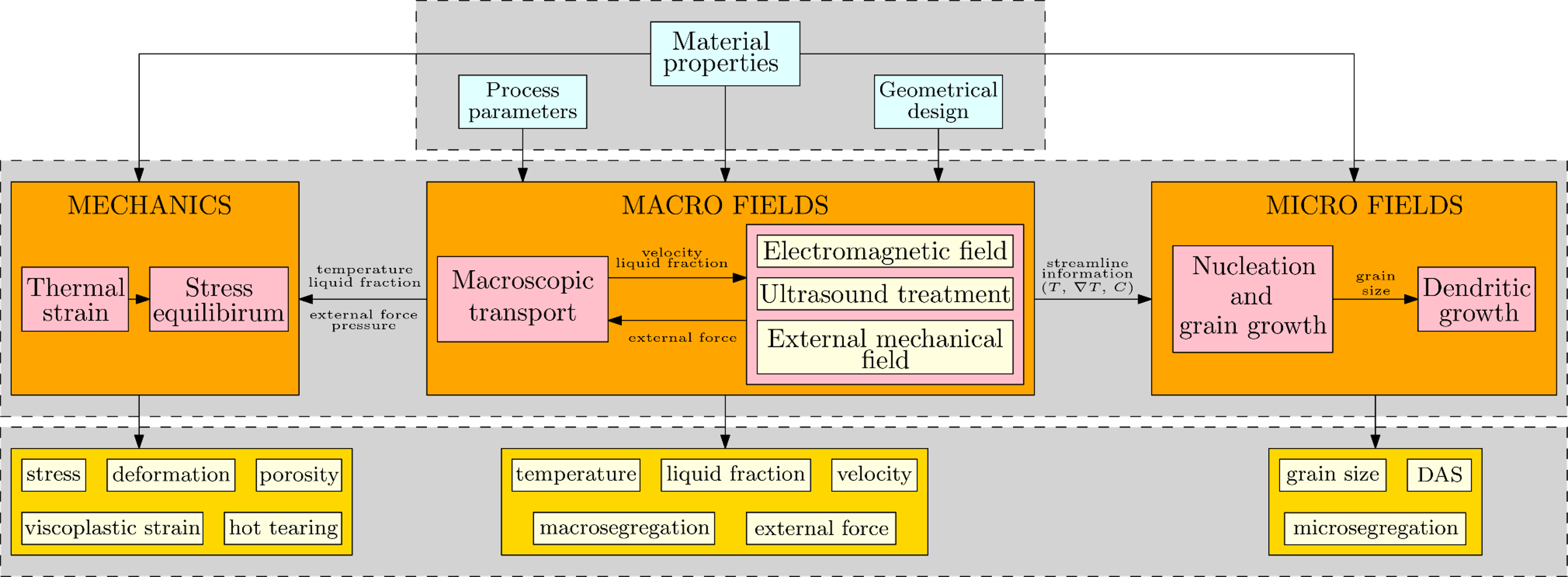
Scheme of sub-models coupling.
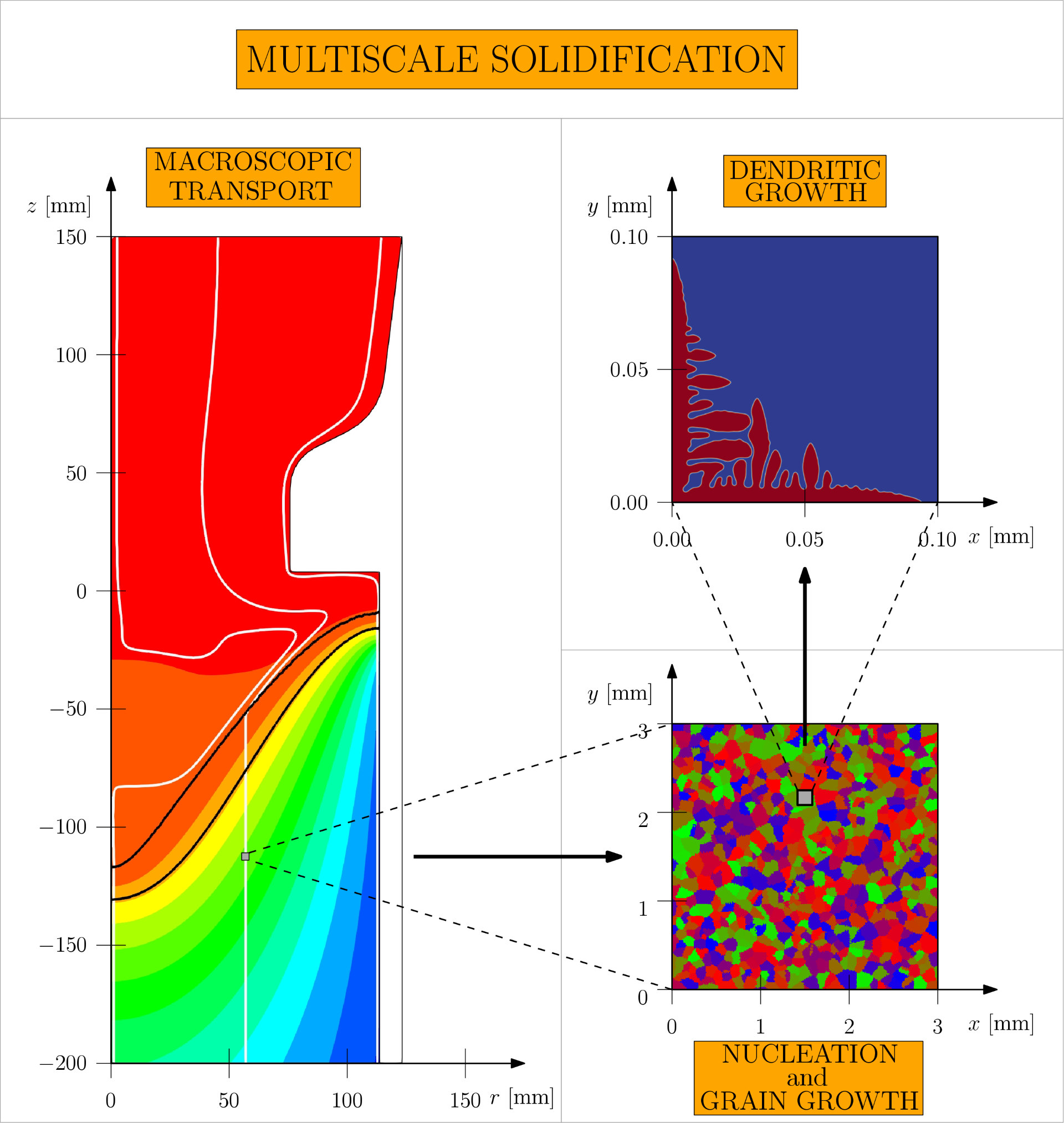
Multiscale solidification.
Direct Chill Casting (DCC) simulator is a computational tool used to model and analyze the direct chill casting process for aluminum and other alloys.
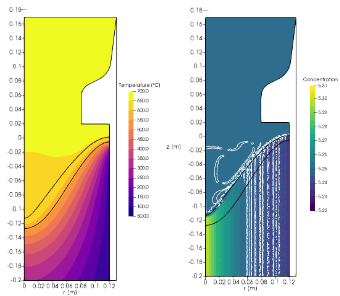
It numerically solves the coupled fluid flow, heat transfer, solute transport, and phase transformation equations that govern solidification during casting.
The simulator provides detailed predictions of the velocity field (melt flow behavior), temperature distribution, and solute concentration field within the billet or slab.
It also determines the solidification front evolution, metallurgical sump depth, and overall solidification depth, enabling accurate characterization of the casting process.
Our DCC simulator consists of three strongly coupled models:
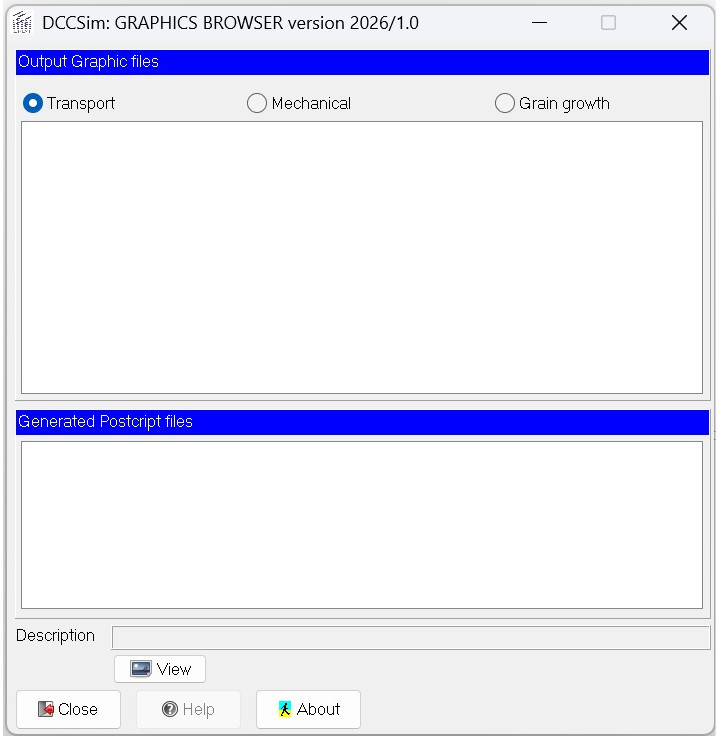
DCC simulator User Interface (GUI).
This core model describes turbulent or laminar melt flow, heat transfer, phase change, and solute transport. It computes velocity, pressure, temperature, liquid fraction, and concentration fields throughout the domain. The thermo-fluid solution defines the solidification conditions (thermal gradients, cooling rates, and local composition) that drive downstream mechanical and microstructural predictions.
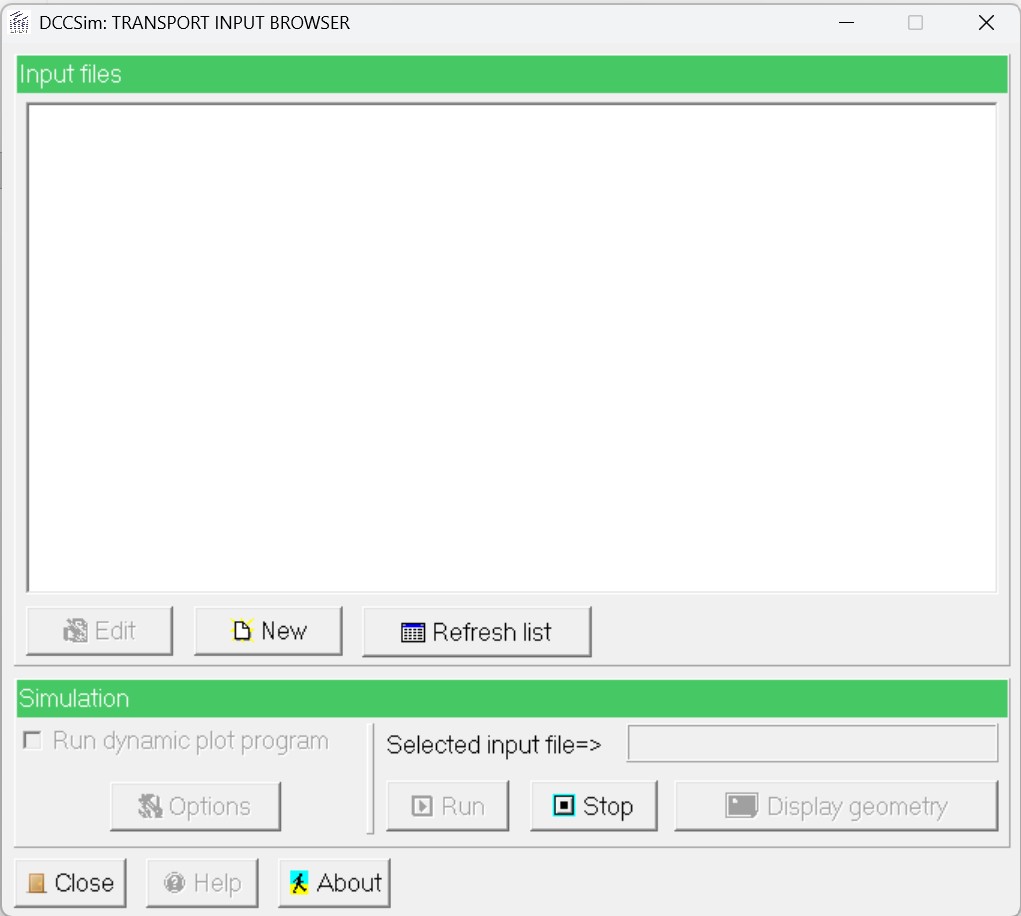
GUI for thermal model.
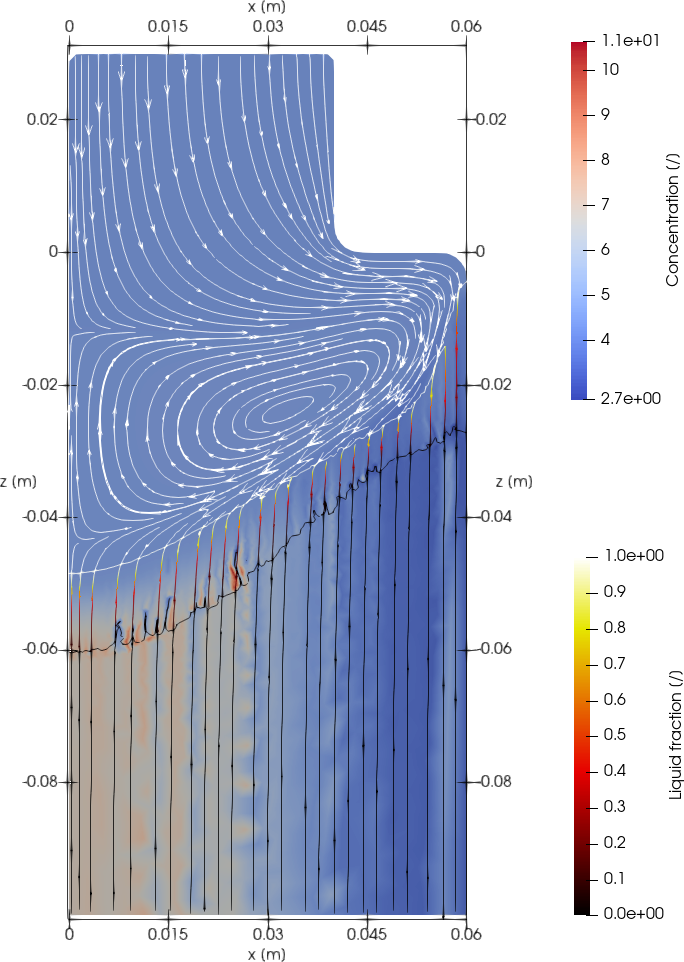
Example of obtained data.
Multiphysics model
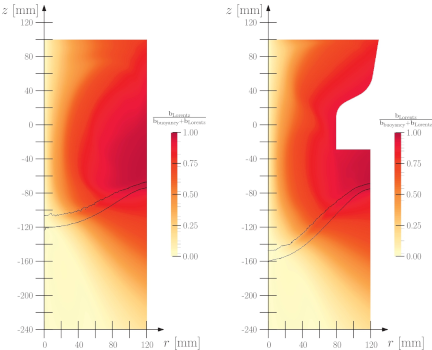
Electromagnetic stirring (EMS) in DCC uses a low-frequency alternating electromagnetic field to induce controlled fluid motion within the molten metal during solidification. A coil placed around the mold generates a time-varying magnetic field, which penetrates the liquid metal and induces eddy currents. The interaction between these currents and the magnetic field produces Lorentz force that drives rotational or swirling flow in the melt. At low frequencies (typically a few hertz), the magnetic field penetrates deeper into the melt, enabling bulk stirring rather than surface-only motion. This controlled flow improves temperature and solute distribution, reduces macrosegregation, refines grain structure, and minimizes defects such as centerline segregation and porosity. In DCC of aluminum alloys, low-frequency EMS enhances billet quality by promoting a more uniform, fine equiaxed grain structure and improving overall metallurgical homogeneity.
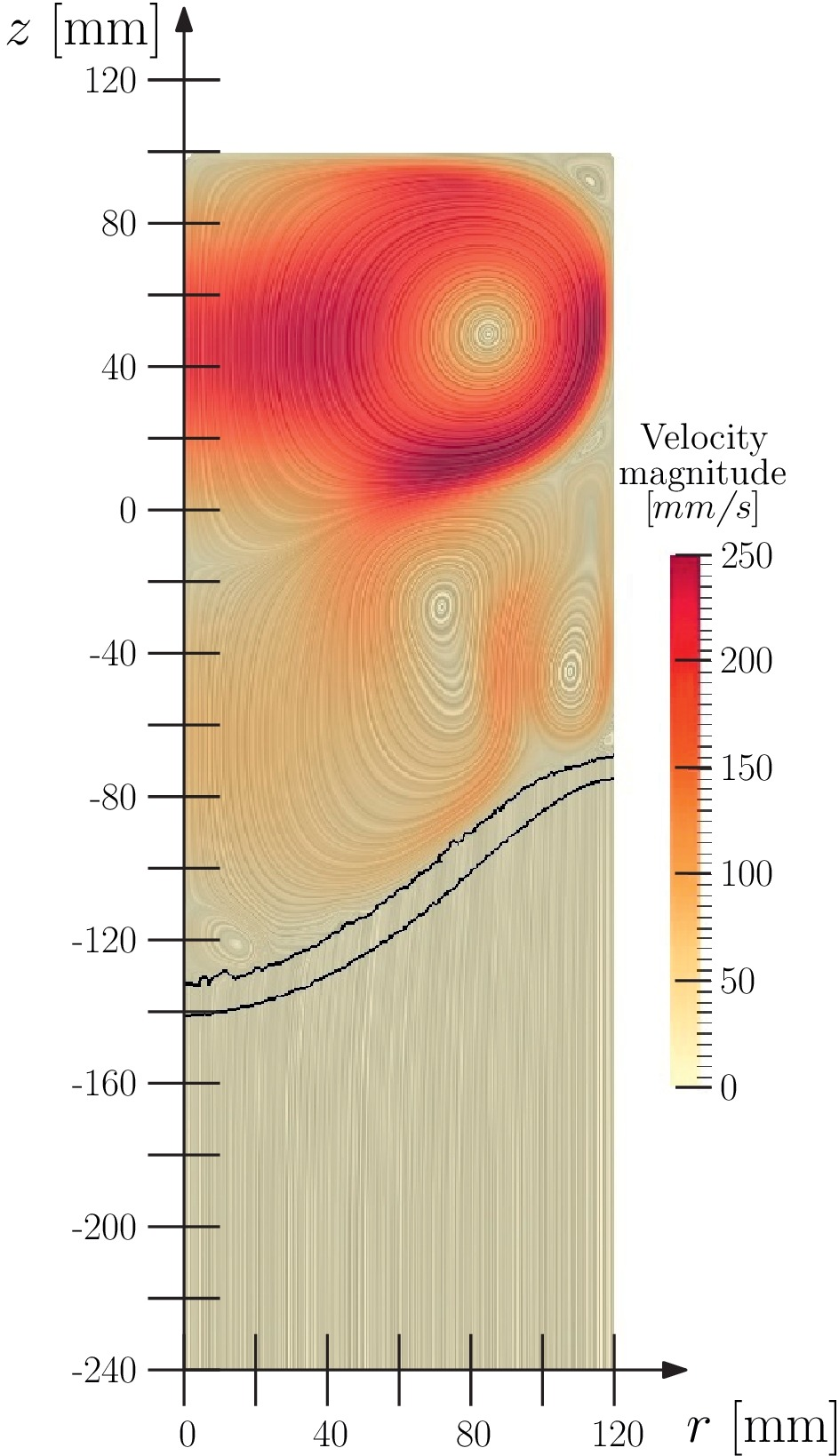
With EM field.
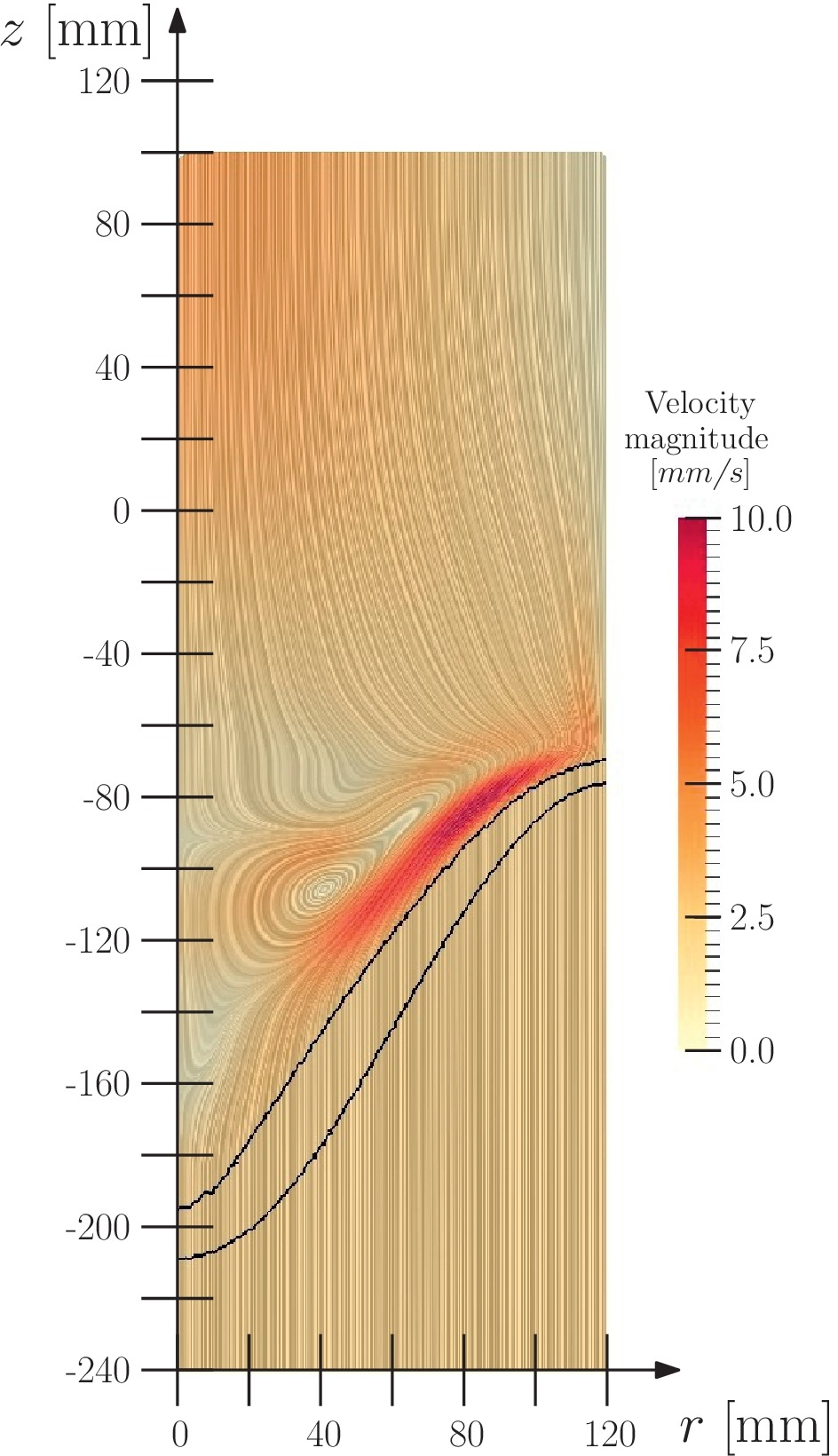
Without EM field.
Based on temperature, solid fraction, and cooling history provided by the thermo-fluid model, the mechanical model predicts stress–strain evolution during solidification and cooling. It evaluates thermal viscoplastic behavior of the mushy zone, and residual stresses. This model is essential for assessing structural integrity of the billet.
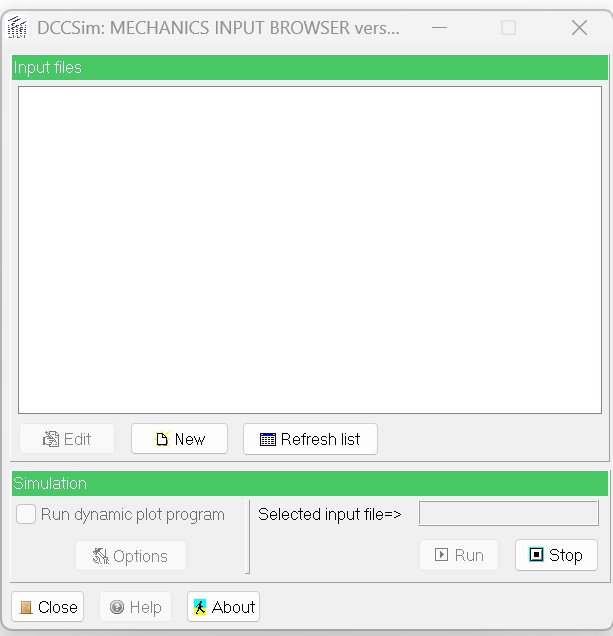
GUI for mechanical model.
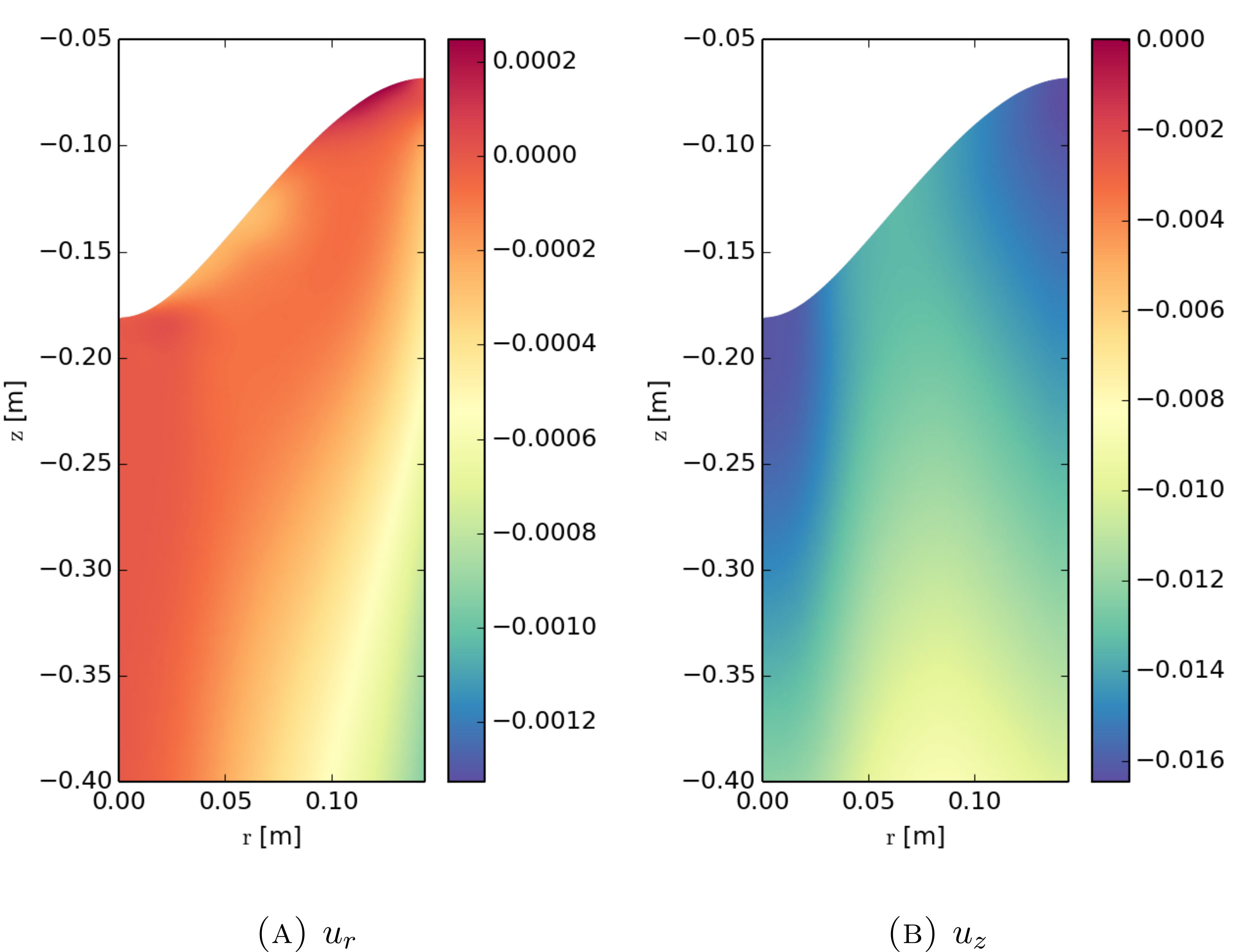
Example of obtained data.
Using local thermal histories and composition data from the thermo-fluid model, the microsegregation model predicts solute redistribution between solid and liquid phases at the microscale. It estimates dendrite arm spacing, grain structure evolution, and local compositional variations. These predictions are critical for understanding macrosegregation tendencies, mechanical properties, and final material performance.
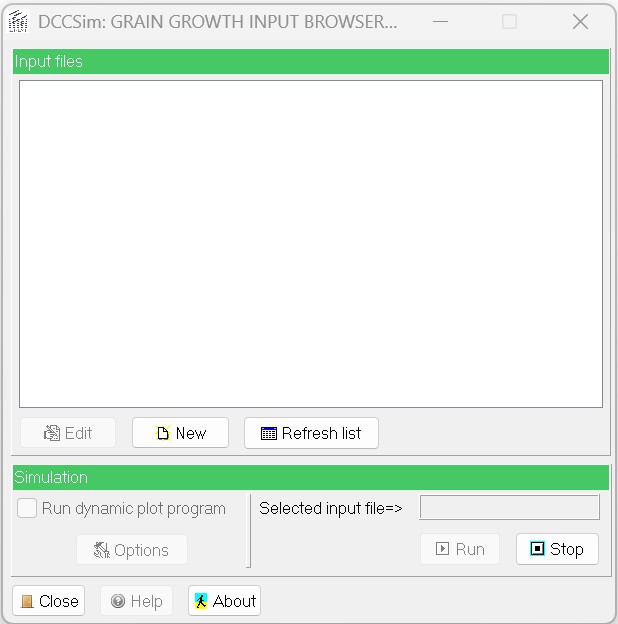
GUI for microstructure model.
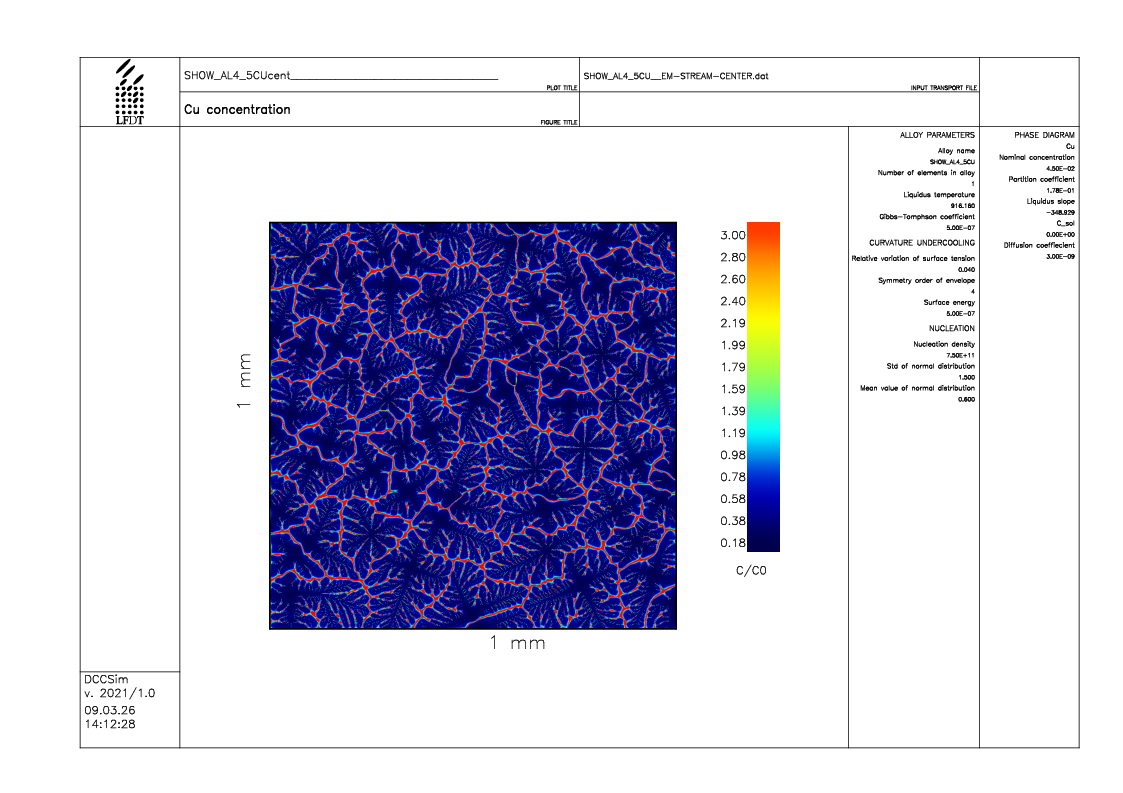
Example of obtained data.
Together, these coupled models provide a comprehensive virtual representation of the DCC process, enabling optimization of process parameters,reduction of casting defects, and improved control over billet quality and metallurgical characteristics.
Our DCC simulator utilises two types of numerical methods:
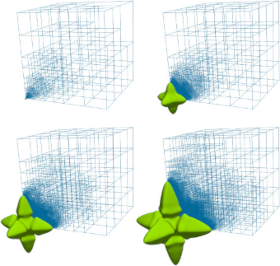
The local RBF collocation method is a meshfree numerical technique used to solve partial differential equations (PDEs). Instead of relying on a global interpolation over all nodes, the domain is discretized into scattered points, and for each point a small local neighborhood (or domain) is selected. Within each domain, the unknown field is approximated using RBF centered at the neighboring nodes. By enforcing the governing differential equations and boundary conditions directly at the collocation points, a local system of algebraic equations is formed. Because the method uses only nearby nodes, it produces sparse system matrices, improving computational efficiency and numerical stability compared to global RBF methods. The local RBF collocation approach is particularly advantageous for complex geometries, moving boundaries, and problems where mesh generation is difficult, while maintaining high-order accuracy and geometric flexibility.
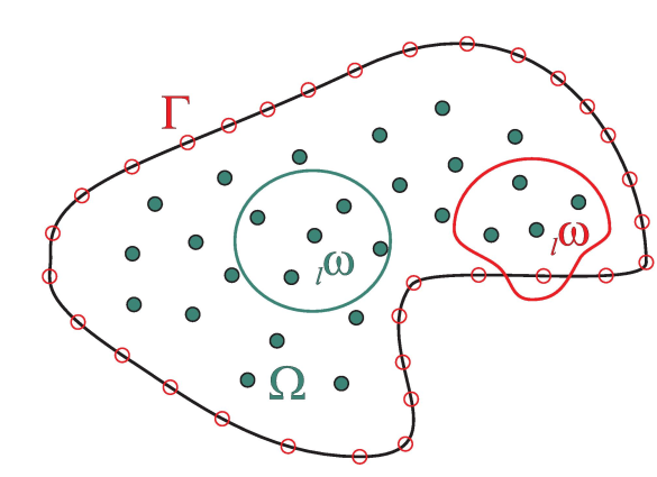
Local RBF method.
The microstructure evolution is simulated using the CA. The input for CA method is the temperature history of a material at three positions in the billet (centre, surface, midpoint). The temperature history is retrieved from the macroscopic thermo-fluid model. The CA method simulates nucleation and grain growth in a representative volume at three positions and predicts the number and distribution of grains within it.
The point-automata method is applied to model grain-structure evolution during the continuous casting of steel. The method is a meshless version of the conventional cellular automata method. The method's input is the temperature field in a 2D or 3D travelling slice. The method simulates nucleation and grain growth. Log-normal distribution of nucleation density over supercooling is applied. Grain growth is described by analytical growth speed and the envelope growth model.
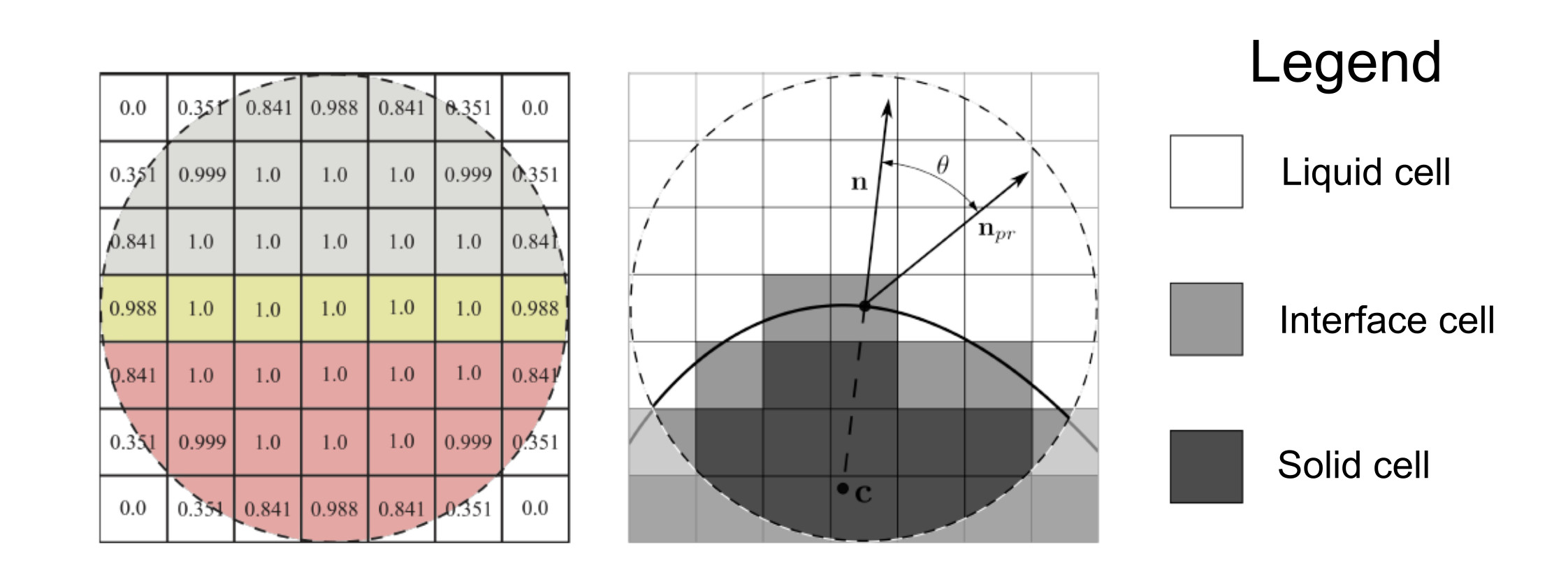
CA method.
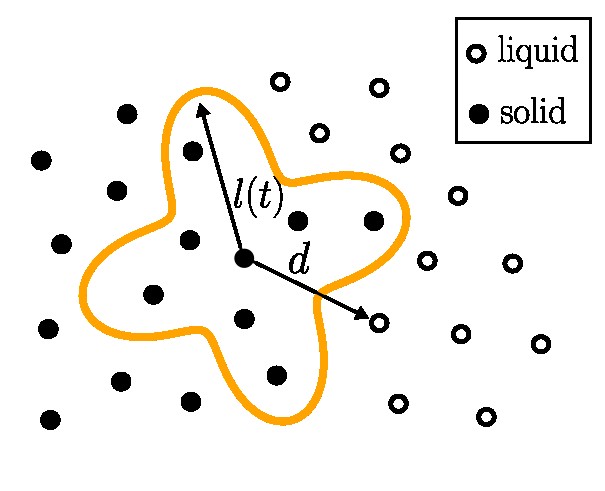
PA method.
|
Simulation of direct chill casting under the influence of a low-frequency electromagnetic field
Applied Mathematical Modelling
|
|
Multi-Physics and Multi-Scale Meshless Simulation System for Direct-Chill Casting of Aluminium Alloys
Journal of Mechanical Engineering
|
|
Improved finite difference method for phase-field modelling of dendritic solidification
Journal of Computational Physics
|